Breaking News
Main Menu
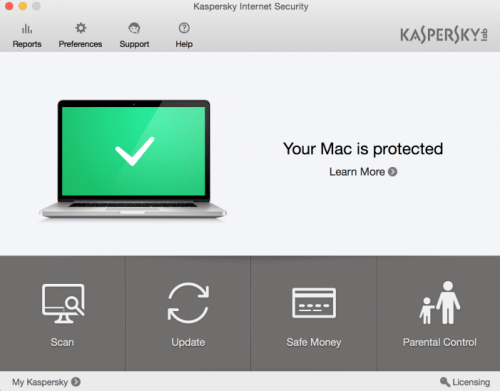
Best Free Antivirus For Mac Doing Action
суббота 19 января admin 86
The best antivirus software will even stop the malicious software from ever reaching your hard drive, recognising and erasing it before it has a chance to collect or return any data about you or your computer.
How We Test Purchasing the right antivirus software is important. Therefore we want to be 100% transparent about the data and method we use to select the best antivirus software of 2018.
We use 6 factors to select the winning software. All factors matter, but not all are equally important. Therefore, the impact they have on the final score varies. All factors, and the impact they have, can be seen here: • Protection from Malware 50% 50% • Impact on Performance and Speed 15% 15% • Devices & Features 10% 10% • User Reviews 10% 10% • Value for Money 10% 10% • False Positives 5% 5%. Further below, we will explain each of the factors in detail. But first, we would like to highlight where our data comes from: The data for Protection, Performance, and False Positives, comes from AV-Test and AV-Comparatives.
These are the two internationally recognized leaders in antivirus testing. The data for the User Reviews comes from TrustPilot and the Google Play Store.
Trustpilot is the most trustworthy platform in the world when it comes to the collection of objective and verified user reviews. And the Google Play Store is the app store for Android, the most used operating system for mobile phones. It has one on of the largest database of software reviews globally. The data for Value for Money comes from the vendor directly.
• Delete All Deletes everything in the folder, including any sub-folders. How to remove personal folders in outlook 2007. • Move Folder Opens a window where you can select a folder to move this folder to. You can't rename the default folders, such as the Inbox folder. • Delete Delete the entire folder. Delete will move the folder to the Deleted Items folder.
These are the protection features offered and the price requested. The data for Supported Devices also comes from the vendors directly. Protection from Malware Protection from malware makes up 50% of the total score The most important feature of any cybersecurity product is, of course, the protection from malware. Malware is a collective term which stands for a large number of cybersecurity threats, including viruses, ransomware, spyware, adware, phishing and more. In order to protect you effectively from such a diverse range of attacks, the most advanced antivirus software use three different protection methods.
Below we provide more detail on each method. All antivirus providers featured in this comparison have been tested in-depth on each of the methods. Signature File Detection: Signature file detection is the most classic form of malware detection. Using this method, antivirus software scan files for traces of malicious code, called digital signatures. This scanning behavior is why many people refer to antivirus software as virus scanners. A digital signature is a unique pattern that allows security tools to recognize malware.
Imagine it as the equivalent of a fingerprint a burglar would leave. Only in this case, it is a digital fingerprint left by malware in its attempt to cause damage to you or your devices. These digital signatures are stored in a database containing hundreds of millions of malware samples. Whenever a new malware threat is uncovered by a cybersecurity company, it is added to the database.
This method of malware detection is reliable, fast, easy to operate, and scalable. However, it is not perfect.
As it relies on cybersecurity companies to first recognize new threats and then updating the malware samples in the database, this method is useless against brand new malware. It is always one step behind new attacks. Therefore, cybersecurity companies have developed a second form of file detection.
Heuristic File Detection: Heuristic file detection is the evolution of signature-based detection. It allows antivirus tools to identify malware that have not been seen before and have not been added to any database. It does so by looking for behavioral patterns that are typical of malware, rather than at malware signatures. Once a file is flagged as having suspicious behavior, there are generally two ways the antivirus software would move forward with its analysis: File Emulation: Also known under the term “sandbox testing”. In this method, the antivirus software will allow the malware to operate in a safe environment called the sandbox.
This is often a virtual machine where the malware can cause no harm, and the antivirus can analyze it in more detail. In the sandbox, the potentially dangerous file is analyzed for common malicious patterns. These include rapid replication attempts, file overwrites, or any attempt to hide certain files. If any of these patterns are detected, the antivirus software takes further action to eliminate the threat. Genetic Signature Detection: New malware are often a slightly adjusted form of existing malware.
This allows the creator to reuse its malware without triggering signature-based detection. In genetic signature detection, however, antivirus software compare the source code of potentially dangerous files with the source code of known malware. If there is a significant overlap between the two, the antivirus software takes further action to eliminate the threat. User-Focused Protection Features: Next to the two methods described above, there is a third way in which antivirus programs protect users from malware. Rather than a specific method, it is a collection of features designed to protect users from downloading malware or visiting dangerous websites.