Breaking News
Main Menu
What Format For Efi Boot Usb Mac
вторник 28 августа admin 7
Freeze the top row and the first column. To freeze the top row and the first column at the same time, click cell B2. Then, on the View tab, click Freeze Panes. Freeze as many rows or columns as you want. Want to freeze multiple rows and/or columns? You can freeze as many as you want, as long as you always start with the top row and the first column. To freeze multiple rows (starting with row 1), select the row below the last row you want frozen and click Freeze Panes. How do you freeze the top row in excel for mac. To freeze the first row and column, open your Excel spreadsheet. Select cell B2. Then select the Layout tab from the toolbar at the top of the screen. Click on the Freeze Panes button and click on the Freeze Panes option in the popup menu. Now when you scroll, you should still continue to see row 1 and column A.
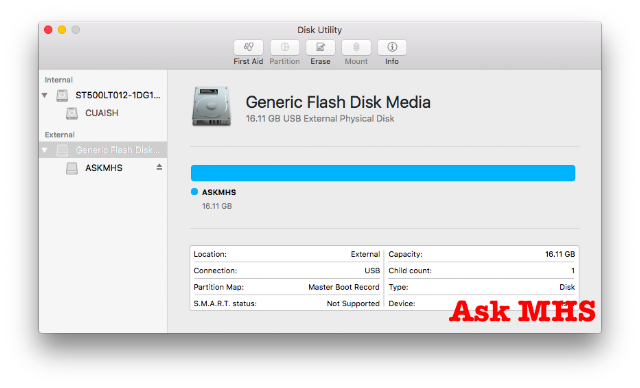
Quicken for mac download. A: Most USB boot sticks are formatted as NTFS, which includes those created by the. UEFI systems (such as ) can't boot from an NTFS device, only FAT32.
Therefore you need to create a bootable USB device that's formatted as FAT32 instead, then copy the contents of the Windows installation media to it.
Contents • • • • • • • • • • • • • • • • • • • • • • • • • • • • • • • • • • • • • • • • Outline The general procedure to install Ubuntu (or Ubuntu flavour, Kubuntu, Lubuntu, Xubuntu.) from a USB flash drive is: • Acquire the correct Ubuntu installation files ('the ISO') • Put Ubuntu onto your USB flash drive • Configure your computer to boot from USB flash drive and boot from it • • Install Ubuntu to your internal drive (hard disk drive or solid state drive). Introduction Ubuntu can be installed from a USB flash drive.
Note – In UNetbootin you can’t select boot option. It already has both UEFI GPT and BIOS MBR mode built into it, so you have to manually turn on UEFI in your BIOS settings to boot USB into UEFI mode. These are the best way to make bootable USB for media installation.
This may be necessary for netbooks and other computers without CD drives and is handy for others because a USB flash drive is so convenient. Also, you can configure Ubuntu on the USB flash drive to save changes you make, unlike a read-only CD-ROM drive. Booting from a USB flash drive created with usb-creator alias Startup Disk Creator and mkusb will behave just as if you had booted from the install CD. It will show the language selection and then the install menu, from which you can install Ubuntu onto the computer's hard drive or launch the LiveCD environment. Other utilities, e.g. Unetbootin, may create slightly different boot drives or if on UEFI might not work at all with Debian iso files Note: This article uses the term 'USB flash drive' alongside USB stick, USB drive, USB device, USB pendrive and thumb drive.
Prerequisites To create a USB installation device, you will need: • a 2 GB USB flash device/drive/stick. If the iso file is smaller than 1 GB, it is possible to use a 1 GB USB device, at least with some of the methods. Files on this USB device will be erased, so backup the files you want to keep before making the device bootable. Make sure this USB device is properly formatted and mounted.
• an Ubuntu flavour ISO file (see to download it) Notes about speed The most common USB ports and USB flash drives work according to the USB 2 standard. Booting from USB 2 from a live drive is faster than from a corresponding CD/DVD disk. Standard USB 2 flash drives have rather slow flash hardware, with read and write speed much slower than the transfer speed of USB 2, so it is worth checking if the speed is specified. USB 1.1 is also possible to use, but it is very slow, slower than a corresponding CD/DVD disk. Hardware according to the USB 3 standard is much faster than USB 2.
So if you have a USB 3 port and a USB 3 flash drive, booting and running will be as fast as from an internal drive (SATA or IDE) or an external eSATA drive. And a USB 3 SSD flash drive has much faster flash hardware, and there are USB 3 pendrives with specified high read/write performance. The market changes quickly, so it is worth checking on the internet, which brand and model to select to get the best buy 'today'.