Breaking News
Main Menu

Safari Mac Browser Emulator Or Emulation
суббота 03 ноября admin 32
Sunday, 06 September 2015 12:10 Testing Your Mobile Site How to test mobile websites on your desktop with different mobile devices is a question we get quite often. There's a huge amount of devices out there and you need to make sure your sites work fine for the majority of them. As Google is placing a huge emphasis on mobile user experience – their latest algorithm update causing nearly 50% of non-mobile friendly URLs to, making it bigger than the 'Panda' update – you can be sure that if your site's mobile visitors will not like the loading speed and what they see, they will leave, and that will affect your site's ranking. We have collected in this post some of the best free and paid tools that you can use to test your mobile sites on your desktop on various devices without having to actually go and loan or purchase the devices. Just keep in mind that whenever possible, it's always best to do sanity checks on the actual devices as well, if you have access to them somehow. Important Note About Latency The screen size is not all there is to mobile. Don't forget to play with the connection speed, which many of the tools allow you to change.
It makes a HUGE difference to the website loading time if the mobile visitor is using a. The total 'network overhead' time for mobile page loading on 3G is over 50%! That's spent without regard to your web server's or the client device's performance, just due to the mobile network latency.
The number of total roundtrips needed (number of HTTP requests) to load a page quickly add up. You won't even realize that if you only do your testing on fast DSL. If you are interested to learn more about how latency affects mobile loading times and massively optimize your Joomla! Website performance on mobile devices, check out our.) Background Preparations - Understanding Your Mobile Visitors There's such a huge amount of devices out in the market that you need to focus your efforts. It's simply not productive to try to test with hundreds of different devices and browsers. It would be best to start with analyzing your target audience, i.e.
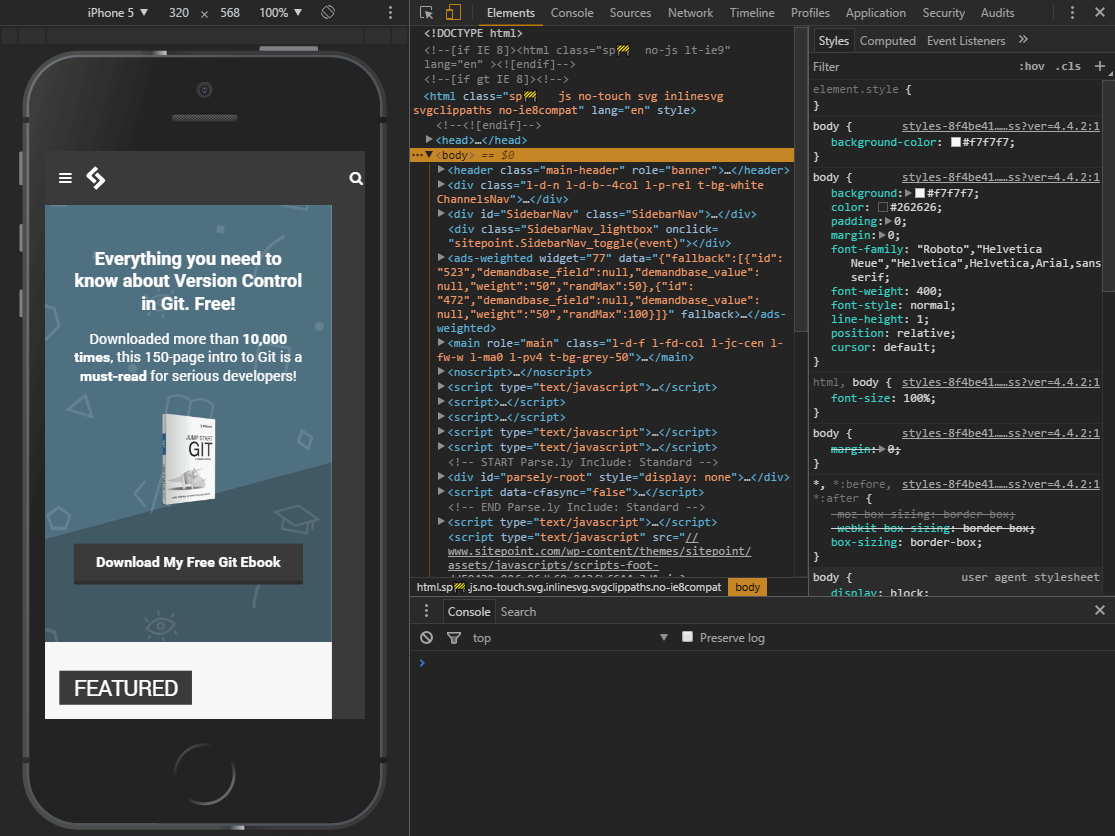
Check your website in official mobile browser emulators from Apple, Google Android and Opera. Test on iPad, iPhone, Motorola, Amazon Kindle and Samsung Galaxy. Check your website in official mobile browser emulators from Apple, Google Android and Opera. Test on iPad, iPhone, Motorola, Amazon Kindle and Samsung Galaxy.
Your website visitors. What are the main user groups in terms of demographics? What devices can you assume they use? Cheaper Android phones, or iPhones?
Windows Phones? From which countries does the majority of your traffic come from? A good tool for checking high-level country-level stats is Statcounter's service, here's for example the graph for: You can and should check your existing traffic from Google Analytics.
Go to your Reporting view, and select Audience->Mobile->Devices, and you will what your current visitors use. You probably will see a lot variations of the same devices and close cousins like Samsung GT-I9295 Galaxy S4 Active, Samsung GT-I9195L Galaxy S4 Mini, Samsung GT-I9195 Galaxy S4 Mini etc. Realistically, you can check your Top 10 devices in more detail, and then combine different variants and include 10-20 more device profiles that you will check in less detail, to cover e.g. 80-90% of your mobile traffic. Naturally the scope depends on how much traffic the site gets. So, with your top 10-30 devices identified, let's review some of the best ways to test your mobile websites: Test on the Real Mobile Device Yes, we promised to cover the various alternative tools, but let's just get this out of the way first. Naturally, it is always best to test your website using the actual devices so that you can actually see what's really going on with your website.
This way you are also able to see any possible bugs in the device software (firmware) which might cause (not-so-)funny outcomes. Also, if you use local caching, you may found out that it doesn't work the way intended if you haven't taken into account the mobile device's much smaller cache space available which fills up fast. The user experience contains many factors like variable network conditions, pixel densities, the relative size of tap targets, and real page load times. In a perfect world, every website would be tested on every major mobile device that it might be viewed on. Online Emulators and Simulators What's the difference between a simulator and an emulator? In many cases, the terms are used interchangeably. Both let you run the mobile device software in the desktop or browser environment.
 Typically emulator specifically means that it works by duplicating every aspect of the original device's behavior down to the hardware. So it tries to mimic the real device use as closely as possible.