Breaking News
Main Menu
How To Install With Pip For Mac
пятница 14 декабря admin 90
As an absolute beginner to programming, you can very quickly learn to do lots of cool things using just your Python interpreter and simple Python scripts. However, you're going to want a few more tools eventually to help you expand to more complex projects. Why not start getting familiar with them now? For me, the hardest thing about branching out was figuring out what tools I really needed and how to interpret their install instructions. Here's a list of tools you will need and a list of easy steps to follow to get set up on a Mac. I'll explain what each line of code is doing so you can learn a little bit about working with a command line interface in the process. All of this should work on Mac OS X 10.7 and 10.8.
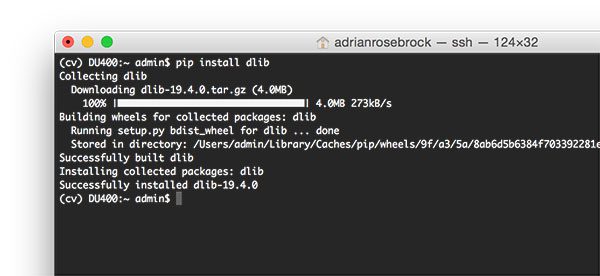
Sep 8, 2017 - Install pip for Python on macOS or OSX in one single command via command line. Easiest possible way! Mac and Linux instructions. As per the pip documentation, we can download a python script to install pip for us. Using a Mac or Linux, we can install pip via the command line by using the curl command, which downloads the pip installation perl script.
Install Xcode Xcode is Apple's Integrated Development Environment (IDE), and there are some tools that come with it that we'll need later. You can get Xcode in the Apple appstore. It's a pretty big download, but this is the easiest way to get these tools on your machine. If you get bored while you're waiting, you could skip ahead and do steps 2, 5, and 6 now. If you want an alternative way to just get the tools you need, without the whole IDE,.
Once Xcode is installed, you still need to install the Apple command line tools! They're easy to get, though. Under the Xcode menu, click preferences.
On the window that pops up, go to the Downloads tab. Find 'command lines tools' and click the install button. Open Terminal. If you've never used Terminal or some kind of command line interface before, it's a good idea to take a minute to familiarize yourself with how they work. Later you you can learn a bit more with the free online book,. I like to have a central place to store all of my programming projects, so I have a folder in my home directory called Code. To make a new folder called Code, open up Terminal.
You should be in your home directory. Just to make sure you could type the following in your Terminal window. Don't type the $, though. $ cd Command line instructions usually start with $, which represents the end of your prompt. The prompt is the string of characters Terminal prints out to let you know it's ready to accept commands. The cd means change directory. If you don't specify where to go, it sends you to your home directory.
Now, to make a folder called Code, you would type: $ mkdir Code The mkdir part means 'make directory'. A directory is analogous to what Finder calls folders. If you make a directory through your command line, it will show up as a folder in Finder.
The Code part is an argument for this command. Mkdir needs us to specify a string that will be the name of the new directory, so we pass it the Code argument. Unlike cd, mkdir will give us an error if we don't also provide a name. As shown below, the error message (second line) tells us that we used mkdir wrong and gives us some guidance on how to use it. Anything in brackets is optional, but the directory name is not! $ mkdir usage: mkdir [-pv] [-m mode] directory.
How to remove header and footer in word 2008 for mac. Install Homebrew Homebrew is a package manager for OS X. A package is a collection of code files that work together. Installing them usually means running a script (a bit of code) that puts certain files in the various directories. A lot of the packages you will want are going to have dependencies. That means they require you to have other packages already installed on your computer. Homebrew will find and install dependencies for you AND it will keep them organized in one location AND it can tell you when updates are available for them.